
What Is a Harmonic Gearbox? How Does It Differ from a Regular Gearbox?
What Is a Harmonic Gearbox?
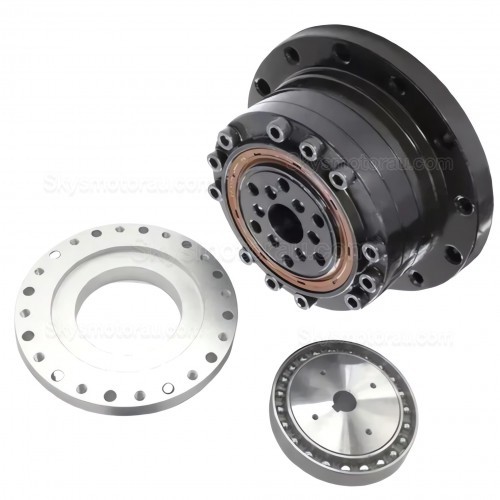
A typical harmonic gearbox consists of three core elements:
1. Wave Generator
The wave generator is usually an elliptical cam fitted with a thin bearing. When it rotates, it imposes an elliptical deformation on the flexible gear component.
2. Flexspline
The flexspline is a thin-walled, deformable cup-shaped gear with external teeth. Because it is flexible, it can be distorted by the wave generator.
3. Circular Spline
The circular spline is a rigid ring gear with internal teeth. It typically has slightly more teeth than the flexspline.
When the wave generator rotates, it forces the flexspline into an elliptical shape so that the teeth of the flexspline engage with the circular spline at two opposite regions. Since the two gears do not have the same number of teeth, each rotation of the wave generator causes the flexspline to move relative to the circular spline by a small tooth difference. This principle generates a large reduction ratio in a very compact package.
How Does a Harmonic Gearbox Work?
The operating principle is based on differential tooth engagement rather than a simple fixed gear pair. For example, if the circular spline has two more teeth than the flexspline, then each full input rotation shifts the flexspline by two teeth relative to the circular spline. Because this shift is small compared with the total number of teeth, the output rotates much more slowly than the input, producing a high reduction ratio.
- This design offers several engineering advantages:
- high reduction ratio in a single stage
- very low backlash
- compact axial structure
- high positioning precision
- coaxial input and output layout
These properties explain why harmonic gearboxes are common in robotic joints, semiconductor equipment, medical devices, antenna drives, and aerospace actuators.
What Is a Regular Gearbox?
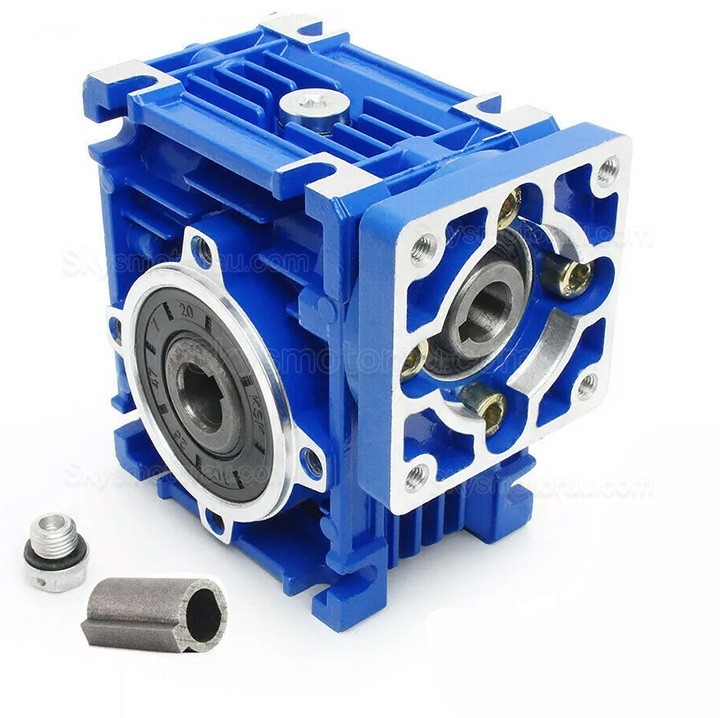
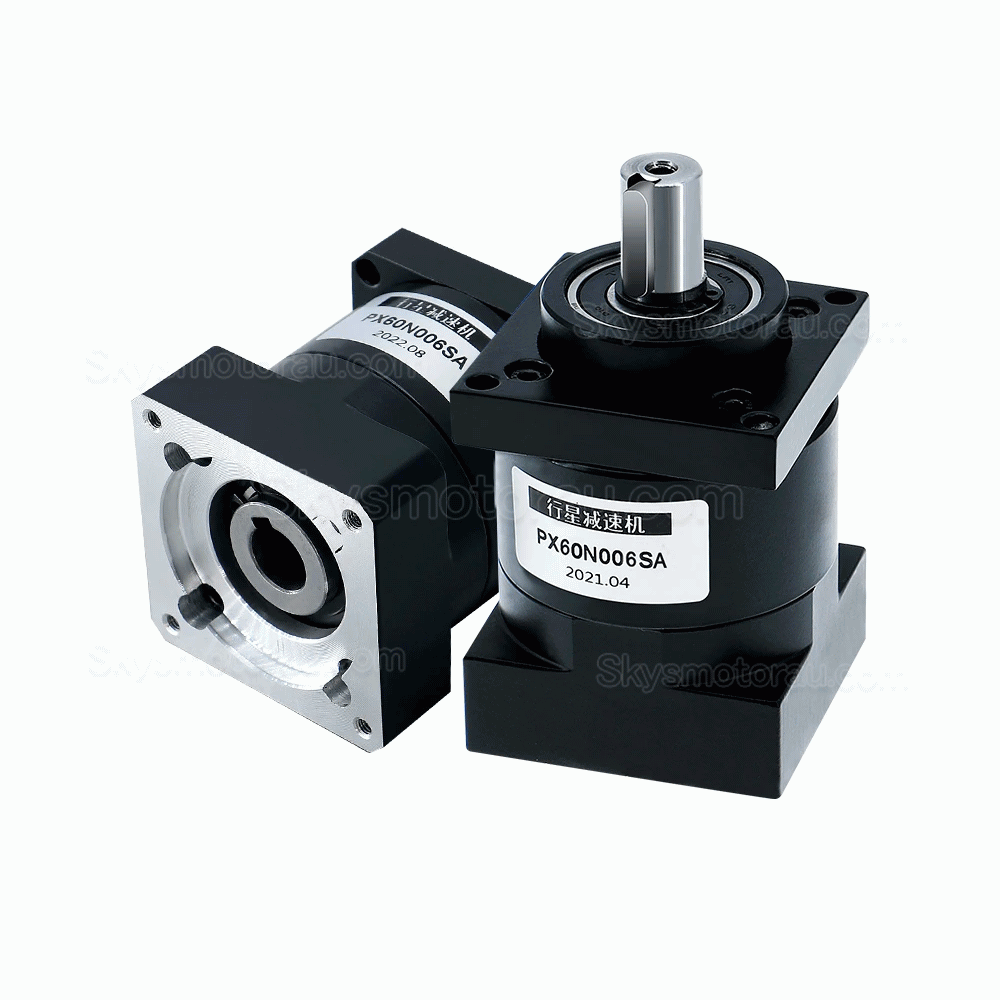
A regular gearbox generally refers to a conventional gear reduction system built from rigid mechanical elements such as spur gears, helical gears, bevel gears, or planetary gears. In these systems, power is transferred through direct tooth contact between solid gears with fixed geometry.
A standard gearbox may contain one or more stages. If a high reduction ratio is required, designers usually stack several gear stages in sequence. This increases complexity, size, weight, and sometimes backlash, depending on the design and manufacturing quality.
Regular gearboxes are widely used because they are versatile, durable, and easier to manufacture across a broad range of power levels. They are found in industrial machines, vehicles, conveyors, pumps, heavy-duty automation systems, and general-purpose transmission assemblies.
Main Difference Between a Harmonic Gearbox and a Regular Gearbox
Although both devices reduce speed and increase torque, their internal mechanisms and performance priorities are fundamentally different.
1. Transmission Principle
The most important difference lies in how torque is transmitted.
A harmonic gearbox operates through elastic deformation of the flexspline. Motion is generated by the repeated reshaping of a flexible gear and the controlled mismatch in tooth count.
A regular gearbox operates through rigid-body meshing. The gears maintain their shape during operation, and torque is transferred through fixed-tooth engagement.
This means a harmonic gearbox is not just another compact reducer. It is based on a different mechanical concept altogether.
2. Reduction Ratio
Harmonic gearboxes can achieve a high reduction ratio in a single stage, often far higher than what a conventional single-stage gearbox can provide.
A regular gearbox usually requires multiple stages to reach the same ratio. While this is not necessarily a disadvantage in every application, it often leads to a larger and more complex structure.
For systems where space is limited, the harmonic design is often more efficient from a packaging standpoint.
3. Backlash and Precision
One of the strongest advantages of the harmonic gearbox is its extremely low backlash. Because of the way the flexspline engages with the circular spline, tooth contact can be maintained with very little clearance.
In contrast, a regular gearbox generally has measurable backlash unless special anti-backlash measures are used. In high-precision servo systems, this difference becomes critical.
For robotic arms, optical positioning systems, and precision indexing mechanisms, even a small amount of backlash can degrade control performance. Harmonic gearboxes are therefore preferred in applications where repeatability and motion accuracy dominate the design requirements.
4. Size and Weight
For a given reduction ratio, a harmonic gearbox is usually more compact and lighter than a traditional multi-stage gearbox. This is especially valuable in articulated robots and lightweight motion platforms, where every kilogram added to a moving joint increases inertia and actuator demand.
Regular gearboxes can still be compact in some configurations, especially planetary gearboxes, but harmonic drives are often superior when the target is high reduction in minimum volume.
5. Torque Capacity and Shock Resistance
This is where regular gearboxes often perform better.
Because a harmonic gearbox depends on a thin flexible element, it is generally more sensitive to overload, shock loads, and repeated impact conditions. It performs best in controlled, high-precision environments rather than harsh mechanical duty.
A regular gearbox, particularly one designed with robust rigid gears, usually offers better resistance to shock, overload, and rough industrial service. In heavy machinery or impact-prone systems, conventional gearboxes are often the safer choice.
6. Efficiency
A regular gearbox often has higher mechanical efficiency, especially in well-designed spur or planetary gear systems. Harmonic gearboxes can show lower efficiency because part of the input energy is associated with flexing deformation and internal friction.
In applications where every percentage point of transmission efficiency matters, this difference can influence motor sizing, thermal behavior, and energy consumption.
7. Service Life and Maintenance Considerations
Harmonic gearboxes can deliver excellent performance, but their flexible components are subject to fatigue-related considerations. Their life depends heavily on load profile, duty cycle, installation accuracy, lubrication condition, and peak torque events.
Regular gearboxes are generally easier to understand, maintain, and service in conventional industrial environments. Their wear mechanisms are more familiar, and replacement strategies are usually more straightforward.
Where Harmonic Gearboxes Are Best Used
A harmonic gearbox is a strong solution when the system requires:
- high positional accuracy
- minimal backlash
- compact structure
- high reduction ratio in one stage
- lightweight rotary joints
Typical examples include collaborative robots, surgical robots, aerospace pointing systems, inspection devices, and high-end servo positioning modules.
Where Regular Gearboxes Are Better
A regular gearbox is often the better engineering choice when the system requires:
- high durability under shock or overload
- simpler maintenance
- lower cost for general applications
- better efficiency
- broader tolerance for harsh working conditions
Examples include industrial conveyors, power transmission machinery, mobile equipment, automotive drivetrains, and heavy-duty automation systems.